I denne artikkelen
- Quick answer
- Identify whether the problem is film, splash, or heat exposure
- Find cleaning instructions for each material
- Clean the hard exterior without spreading grease into openings
- Handle greasy grille fabric conservatively
- Avoid kitchen cleaning shortcuts and sound-based promises
- Dry and compare sound under controlled conditions
- Know when to seek service and improve kitchen placement
- Sources
Quick answer
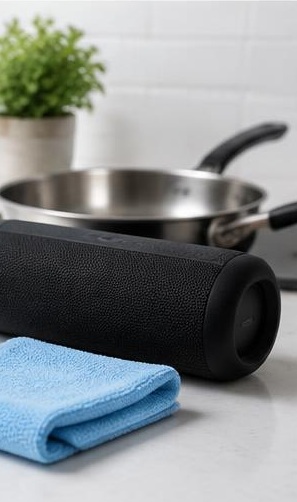
Turn the speaker off, disconnect its power when safe, and move it away from the cooking area. Let a warm enclosure return to normal temperature before cleaning. Remove only accessible surface grease with the soft cloth and method approved for your exact model. Do not spray kitchen cleaner onto the grille, soak fabric, or use dishwashing liquid simply because it removes grease from cookware.
Separate the hard cabinet from the acoustic covering: permission to wipe plastic does not necessarily extend to mesh, fabric, ports, or moving radiators. For speakers without explicit grease-cleaning instructions, ask manufacturer support before using solvents. Sony, for example, prohibits detergent, alcohol, and several other chemicals on specified speaker fabric because they can affect its water-repellent properties. helpguide.sony.net guidance Stronger cleaning is not automatically safer or more effective.
Identify whether the problem is film, splash, or heat exposure
A light airborne film built up over weeks is different from a fresh splash of hot oil. Note whether the enclosure was close to a frying pan, directly above steam, or beside a burner. Heat damage, a sticky coating, and liquid intrusion require different responses. If hot oil struck an opening, the speaker smells unusual, or its casing changed shape, stop using it and contact support.
Inspect under good light without pressing on acoustic fabric. Look for a glossy film, dust stuck to grease, discoloration, and residue around controls or connectors. Do not assume muffled sound proves the grille is clogged: placement, sound settings, and a damaged driver can produce similar symptoms. Record the previous sound condition and whether the change followed one cooking incident or developed gradually. This helps distinguish routine surface care from a potentially damaging exposure.
Find cleaning instructions for each material
Locate the product manual and identify which parts are hard plastic, painted metal, rubber, fabric, wood, or exposed acoustic components. A speaker may combine several finishes with different chemical tolerances. Do not treat removable-looking mesh as user-removable unless the manufacturer says it is. Opening a sealed portable speaker can compromise protection and expose electrical or battery hazards without improving access safely.
General electronics advice also has limits. Apple recommends a soft, lint-free cloth, avoiding moisture in openings, and not spraying cleaners directly onto products; its disinfectant allowances are restricted to specified hard, nonporous surfaces, not fabric. apple.com guidance That does not authorize an Apple cleaning product on another brand's speaker. The useful principle is to match the method to the actual material and manufacturer rather than treating every exterior surface alike.
Clean the hard exterior without spreading grease into openings
Use the cloth condition and cleaning agent, if any, specified for the cabinet. Work on a small accessible area with light pressure, moving to a clean cloth section frequently. Wiping repeatedly with a greasy section can spread residue onto buttons and grille edges. Keep liquid away from seams, connectors, and controls, and never apply a cleaner directly to the speaker as a spray.
If the manual permits a slightly damp cloth, ensure it is not wet enough to drip or release liquid when pressed. Support the speaker securely without covering a radiator or turning it over onto a contaminated worktop. Stop if the finish becomes tacky, color transfers to the cloth, or a coating appears to lift. A cabinet that still feels slightly greasy is preferable to one damaged by an unapproved solvent or excessive rubbing.
Handle greasy grille fabric conservatively
Fabric is difficult because grease can bind dust within the weave rather than remain on top. Do not scrub it with a brush or force a cloth into the openings. Avoid adhesive putty, tape, baking soda, and absorbent powders: they can leave additional material trapped in the covering. A domestic vacuum is not a universal safe solution, particularly where the manufacturer warns against suction near acoustic parts.
If the model authorizes fresh-water cleaning for certain contaminants, confirm whether that instruction covers your situation before using it for cooking oil. Do not add detergent merely because water alone seems ineffective. For a speaker whose mesh has no approved grease-removal procedure, stop after conservative exterior care and contact support. Professional grille or covering service may be more appropriate than trying to dissolve an embedded film through the assembled speaker.
Avoid kitchen cleaning shortcuts and sound-based promises
Oven cleaner, citrus degreaser, disinfectant spray, bleach, and abrasive pads are designed for other surfaces and can damage speaker finishes, adhesives, and coatings. Alcohol is not universally acceptable either. Steam cleaning adds both heat and moisture, while a hair dryer can soften residue and spread it rather than remove it. Do not put a portable speaker in a dishwasher or immerse it because its label says waterproof.
Sound cannot dissolve cooking grease or remove an oily film from fabric. A tone may reveal distortion, but prolonged loud playback does not turn the speaker into a self-cleaning appliance. Likewise, increasing treble to compensate for muffling hides the symptom rather than resolving contamination. Keep sound settings unchanged during the initial assessment so you can judge whether the approved cleaning method made a real difference.
Dry and compare sound under controlled conditions
If the approved cleaning method involved moisture, allow the speaker to dry completely under its manufacturer's conditions before reconnecting power or playing audio. Keep it in a ventilated room away from the stove and direct heat. Check charging connectors separately; a dry cabinet does not prove a recessed port is dry. Do not use charging as a test while moisture or contamination remains uncertain.
When use is appropriate, play a short familiar voice recording and music passage at a moderate level. Place the speaker on a clean, stable surface and keep its normal orientation. Compare clarity, not just loudness, and avoid changing several equalizer controls simultaneously. If sound remains poor, try another source before attributing everything to grease. A persistent rasp, one-sided distortion, or abrupt shutdown deserves support rather than another round of increasingly aggressive cleaning.
Know when to seek service and improve kitchen placement
Ask support for help when grease entered a connector, a control remains sticky, mesh stays visibly saturated, or the approved method does not restore normal operation. Explain whether the contaminant was airborne residue or hot oil, and list any chemicals already used. Stop immediately for battery swelling, abnormal heat, smoke, or burning odor. Do not remove the grille or enclosure to clean internal components yourself.
For prevention, place the speaker outside the direct path of steam and frying aerosols, with adequate clearance from heat sources and water. Use ventilation while cooking, but do not position the speaker where it blocks an extractor or can fall into a sink. Handle controls with clean, dry hands. Periodic manufacturer-approved exterior care prevents a light film from becoming a sticky dust layer that is much harder to address safely.
Sources
Sony SRS-XB43, coating-sensitive speaker care: helpguide.sony.net guidance
Apple, material-specific electronics cleaning precautions: apple.com guidance