Quick answer
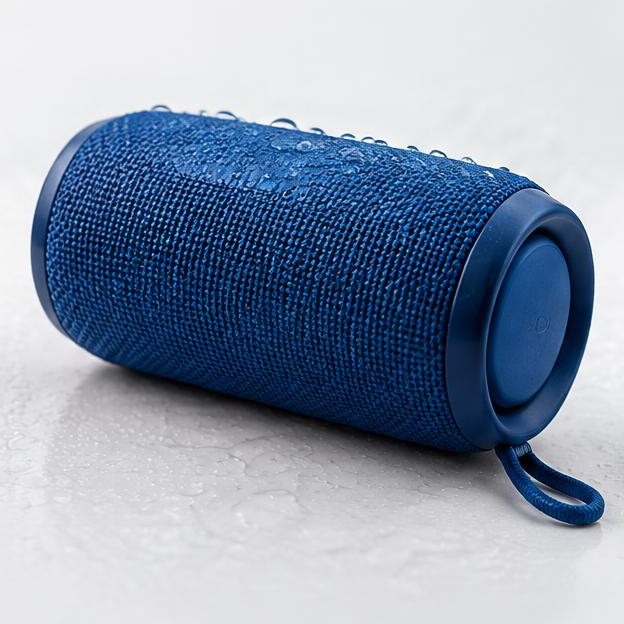
A portable speaker described as waterproof can still have specific conditions for use, drying and charging. The rating may depend on a port cover being securely closed, an intact enclosure and exposure to approved liquids. Accessories and electrical connectors may have different protection from the main body. Begin by finding the exact model number and reading its water-resistance and care instructions rather than treating the marketing label as a complete safety rule.
Neste artigo
- Waterproof does not mean every part can be used wet
- Why a wet speaker can sound different
- Read the liquid and depth limits literally
- Drain and dry according to the speaker's design
- Keep charging separate from waterproof playback claims
- Test ordinary audio only after safe drying
- When to request service and how to prevent recurrence
- Sources
Waterproof does not mean every part can be used wet
A portable speaker described as waterproof can still have specific conditions for use, drying and charging. The rating may depend on a port cover being securely closed, an intact enclosure and exposure to approved liquids. Accessories and electrical connectors may have different protection from the main body. Begin by finding the exact model number and reading its water-resistance and care instructions rather than treating the marketing label as a complete safety rule.
If the speaker is wet, disconnect accessories when safe, move it away from the water and wipe the exterior with a soft cloth. Do not leave it playing underwater or power it on while submerged to see whether the rating works. If it was immersed beyond the stated conditions, has visible damage or behaves abnormally, turn it off and seek guidance. A water-resistance specification is not a reason to continue an uncertain exposure or perform a demonstration.
Why a wet speaker can sound different
Water held in a grille, fabric covering or acoustic recess can temporarily change how sound reaches the room. A speaker may sound dull, quieter or uneven without that alone proving a failed driver. Water on nearby surfaces can also create rattles or alter placement. However, the same symptom can occur with internal liquid damage, contaminated fabric or a component fault, so do not assume every change is harmless surface moisture.
Note the circumstances: rain, a poolside splash, seawater, a spill or full immersion. Record whether sound changed immediately and whether the USB cover was closed. Check for water around the charging port without inserting anything. If the speaker starts and stops unexpectedly, becomes unusually hot or produces a new severe mechanical noise, stop testing. Good diagnosis begins with the exposure history and model requirements, not a long bass sweep intended to force the problem away.
Read the liquid and depth limits literally
An IP designation describes defined testing, not unlimited resistance to all liquids, temperatures or pressures. A device may tolerate a specified immersion condition while remaining unsuitable for hot showers, detergents or strong jets. Saltwater suitability also varies. Do not infer chemical compatibility from a depth number, and do not assume a larger speaker has stronger protection than a smaller one.
For example, Sony's ULT FIELD 1 guidance lists fresh water, tap water, pool water and saltwater as applicable liquids, while excluding liquids such as soapy water and water containing detergent or shampoo. Its stated waterproof performance depends on the cap being fastened securely, and its USB connector and supplied accessories are not waterproof. These details illustrate why the exact manual matters; they are not specifications for every Sony or other-brand speaker. Older seals, impact damage and an improperly fitted cover can also change the real situation. helpguide.sony.net guidance
Drain and dry according to the speaker's design
Wipe accessible water and place the speaker in a dry, ventilated location at room temperature. Follow any orientation or drainage instructions in its manual. Do not shake it violently, push cloth through a grille or press on exposed passive radiators. Fabric coverings and recessed areas may remain damp longer than smooth outer panels, so inspect the whole device rather than judging by one dry patch.
Avoid heaters, ovens, hot hair dryers and prolonged direct sunlight. Compressed air can move moisture or stress delicate parts and is not a universal drying method. Do not pack the speaker in rice or pour cleaning products into the grille. If pool chemicals, salt or a sugary drink were involved, consult the model's cleaning guidance. Some products prescribe a particular external cleaning process, but you should not copy that process onto another speaker or flush the charging port. Drying alone may not remove residue.
Keep charging separate from waterproof playback claims
Do not charge a wet speaker. Sony specifically warns that even waterproof or moisture-proof wireless speakers can malfunction or be damaged if charged while wet. Its guidance says to check for water, moisture and dirt around the speaker and charging area, remove accessible contamination with a soft dry cloth and let everything dry completely at room temperature before charging. The cable must also be clean, dry and undamaged. sony.com guidance
Do not open a wet port cover casually and allow exterior water to run into the recess. Follow the manual's sequence for drying and accessing the connector. A moisture warning is useful if provided, but its absence is not proof of dryness. Do not connect USB power to test whether the battery still accepts charge. Once charging is appropriate, use compatible equipment on a dry surface, then close the protective cap correctly before any future water exposure.
Test ordinary audio only after safe drying
When the speaker has dried and the manufacturer's instructions allow use, test a familiar spoken recording and a familiar piece of music at a comfortable level. Use a stable surface and compare with the previous equalizer settings. Check Bluetooth routing and source volume so a connection problem is not mistaken for water damage. If one recording sounds poor, try another source before judging the speaker.
A long low-frequency tone is not a universal drying tool. Portable speakers have different drivers, passive radiators, processing and protective limiters, so no single frequency can be assumed to eject water reliably. Do not increase the level to force visible movement or continue through harsh distortion. A brief test should answer whether the symptom remains. If the speaker sounds normal, that is encouraging, but still check for charging problems or intermittent operation. Good audio does not independently verify every seal, connector or internal component.
When to request service and how to prevent recurrence
Contact the manufacturer or a qualified service provider if muffling persists after proper drying, the enclosure or cap is damaged, water appears trapped inside or operation becomes erratic. Explain the liquid type, exposure duration, approximate conditions, cap position and whether power was connected. Ask about inspection, repair options and coverage without assuming that a waterproof claim guarantees warranty protection for every incident.
For future use, inspect port-cover fit before going outdoors and keep the charging area away from water. Remove residue promptly using the approved method for the model, and dry the speaker before storage. Do not put a damp unit into a sealed bag where moisture can remain concentrated. Keep it away from strong jets, hot water and cleaning chemicals unless the manual explicitly permits them. The practical goal is to preserve the protective design, not repeatedly test its limits. A reliable speaker is one used within its stated conditions and charged only when clean and dry.
Sources
Sony manufacturer guidance: helpguide.sony.net guidance ; sony.com guidance