
Subwoofer test for low-frequency troubleshooting
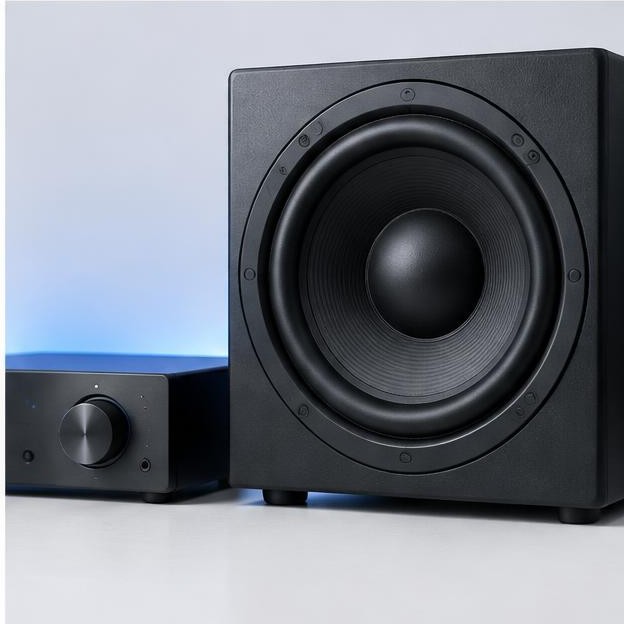
The FixMySpeaker.now Subwoofer Test covers 20 to 200 Hz, a range useful for checking low-frequency playback on a compatible audio system. It can help you notice missing bass, rattles, uneven response, or problems around the crossover region. It cannot perform subwoofer repair, measure accurate output without additional equipment, or tell you that a driver is safe at every volume.
Use the test with a real subwoofer or speakers designed for bass. Phone and laptop speakers often cannot reproduce the lowest notes meaningfully. Hearing little or nothing from a tiny speaker at 20 Hz is not evidence that it is broken. A useful test starts with suitable hardware, sensible settings, and a volume low enough to keep the equipment comfortable.
How to prepare and run the test
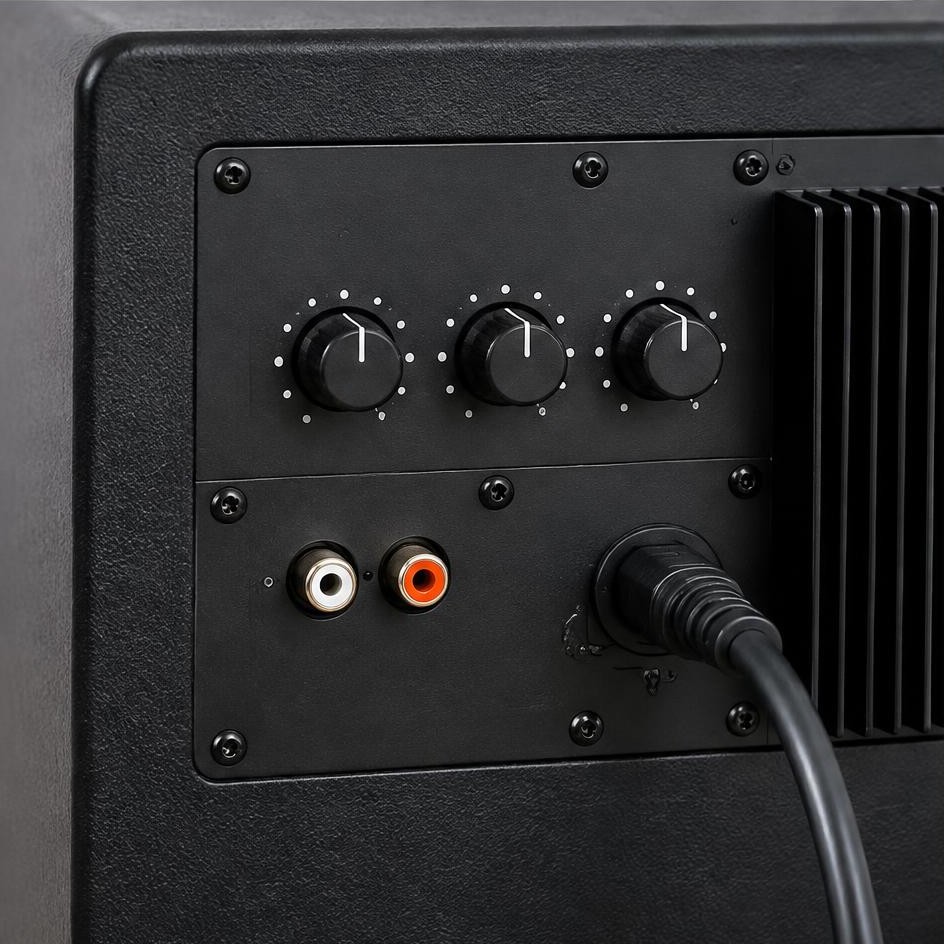
Check that the subwoofer has power and that its input cable is connected to the correct output. Select the intended playback device on your computer or phone. Start with the system volume low and the subwoofer gain at a conservative setting. If you use a receiver, review its speaker and bass-management settings before changing anything, and note the original values.
Play briefly, then adjust level gradually until the bass is audible without strain. Listen from your usual seat and stop if you hear knocking, scraping, or obvious distress. Make one adjustment at a time so each change has a clear purpose.
Keep loose objects away from the cabinet and nearby shelves.
Avoid sustained playback at the lowest frequencies.
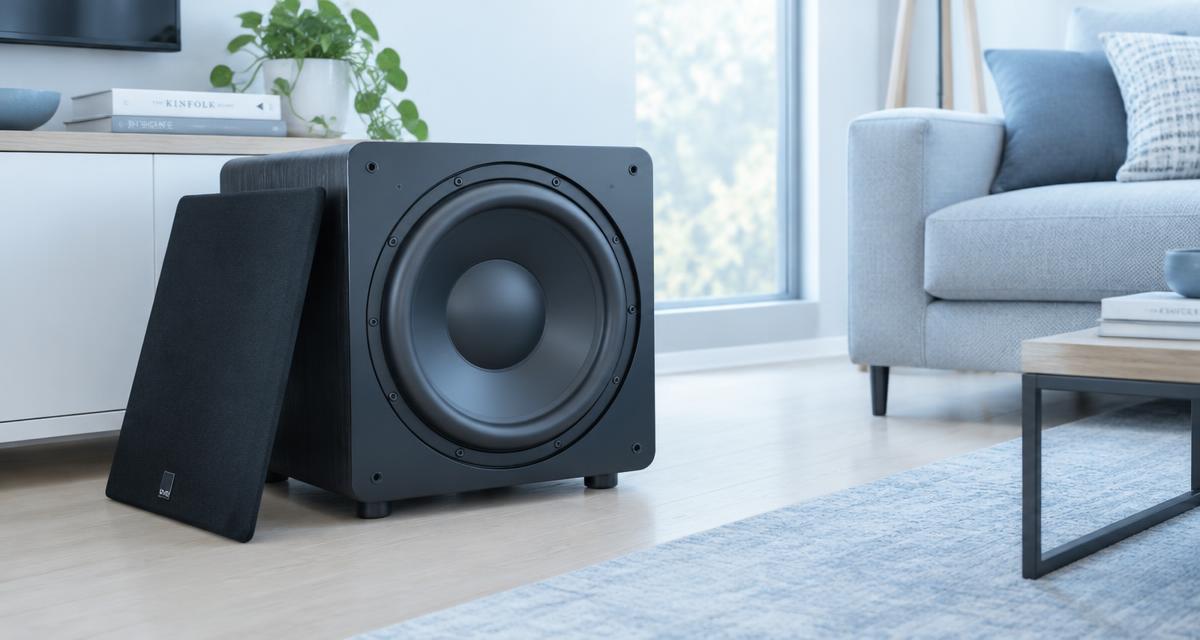
Compare several listening positions before blaming the driver.
What happens between 20 and 200 Hz
Low-frequency sound involves relatively slow pressure changes. Reproducing strong deep bass can require substantial cone movement and amplifier power. A subwoofer’s usable range depends on its driver, enclosure, amplifier, and protection filters. A frequency listed on a test tool is an available signal, not a promise that your equipment can reproduce it loudly or without distortion.
Near the lower end, you may feel vibration more clearly than you hear a musical pitch. Higher in the range, bass can become easier to locate and may overlap with the main speakers. Uneven loudness is common because both the system and the room shape the response. Avoid trying to make every note equally loud by turning up the deepest notes aggressively.
Crossover, phase, and room placement
A crossover divides frequency duties between the subwoofer and other speakers. If receiver bass management and the subwoofer’s own low-pass control overlap poorly, the transition may sound weak or excessive. Follow the equipment manual rather than assuming one crossover value suits every system. The size and capabilities of the main speakers matter, as does the receiver’s configuration.
Room reflections can create strong peaks and dips at particular seats. Moving your head or changing seats may reveal a large difference without any equipment change. Phase or polarity settings can also affect how the subwoofer combines with the main speakers. Change settings cautiously, compare at the same listening position, and keep a record. Do not use a phone microphone reading as a calibrated diagnosis of deep bass.
Device-specific connection tips
For a home theater receiver, verify that a subwoofer is enabled and that the selected listening mode sends suitable bass to it. Browser audio is not automatically a dedicated LFE channel. A stereo signal reaches the subwoofer only if the playback system routes or redirects relevant frequencies. Some direct or pure modes change that behavior, depending on the receiver.
For computer speakers, check the subwoofer connection and any hardware bass knob. For Bluetooth systems, confirm the correct device is connected and allow for built-in processing. In a car, avoid testing while driving and consider that cabin acoustics strongly affect bass. Never run an engine in an enclosed space just to power an audio system. Use the manufacturer’s recommended operating conditions.
When a symptom suggests subwoofer repair
No output can come from power, routing, a cable, auto-standby behavior, or a failed component. Check external causes before assuming the driver is damaged. If the subwoofer has an indicator light, interpret it using the manual. A low-level signal may not wake some automatic standby circuits immediately. Do not defeat protective features or repeatedly raise volume to force activation.
A scrape, knock, burning smell, or repeated shutdown is a reason to stop. Unplug equipment safely if the manufacturer’s guidance calls for it, and seek qualified service. Subwoofer repair may involve an amplifier or internal power supply, where hazardous voltages can remain after disconnection. This browser tool does not make opening the cabinet safe. A damaged surround or loose cabinet part also needs physical inspection.
Safety for drivers, rooms, and listeners
Deep bass can be powerful even when it does not seem subjectively loud. Long, steady tones may stress equipment differently from ordinary music. Keep sessions brief, begin quietly, and allow breaks. Do not use maximum volume or heavy bass boost as a test method. Stop when the cone appears to move excessively or the system sounds strained.
Secure objects that might fall from shelves, and consider neighbors before testing in shared buildings. Do not touch a moving driver or obstruct ports. Keep drinks away from powered equipment and provide the ventilation specified by the manufacturer. If you need a maximum-output measurement, use appropriate measurement methods and professional guidance instead of increasing an online tone until something distorts or fails.
Quick answers and practical next steps
Why is one bass note much quieter? Room cancellation, crossover behavior, and the subwoofer’s response can all contribute. Why does the cabinet buzz? A nearby object, loose grille, enclosure part, or damaged component may be responsible. Listen at low level and inspect only accessible exterior parts. Do not keep playing a frequency that produces a severe mechanical noise.
Can this subwoofer test fix weak bass? It can help identify conditions worth checking, but it does not change hardware or guarantee a repair. Use the Speaker Test for left and right channel routing, and the Tone Generator for a specific frequency. If careful connection checks and conservative setting changes do not resolve the issue, share your observations with the manufacturer or a qualified technician.